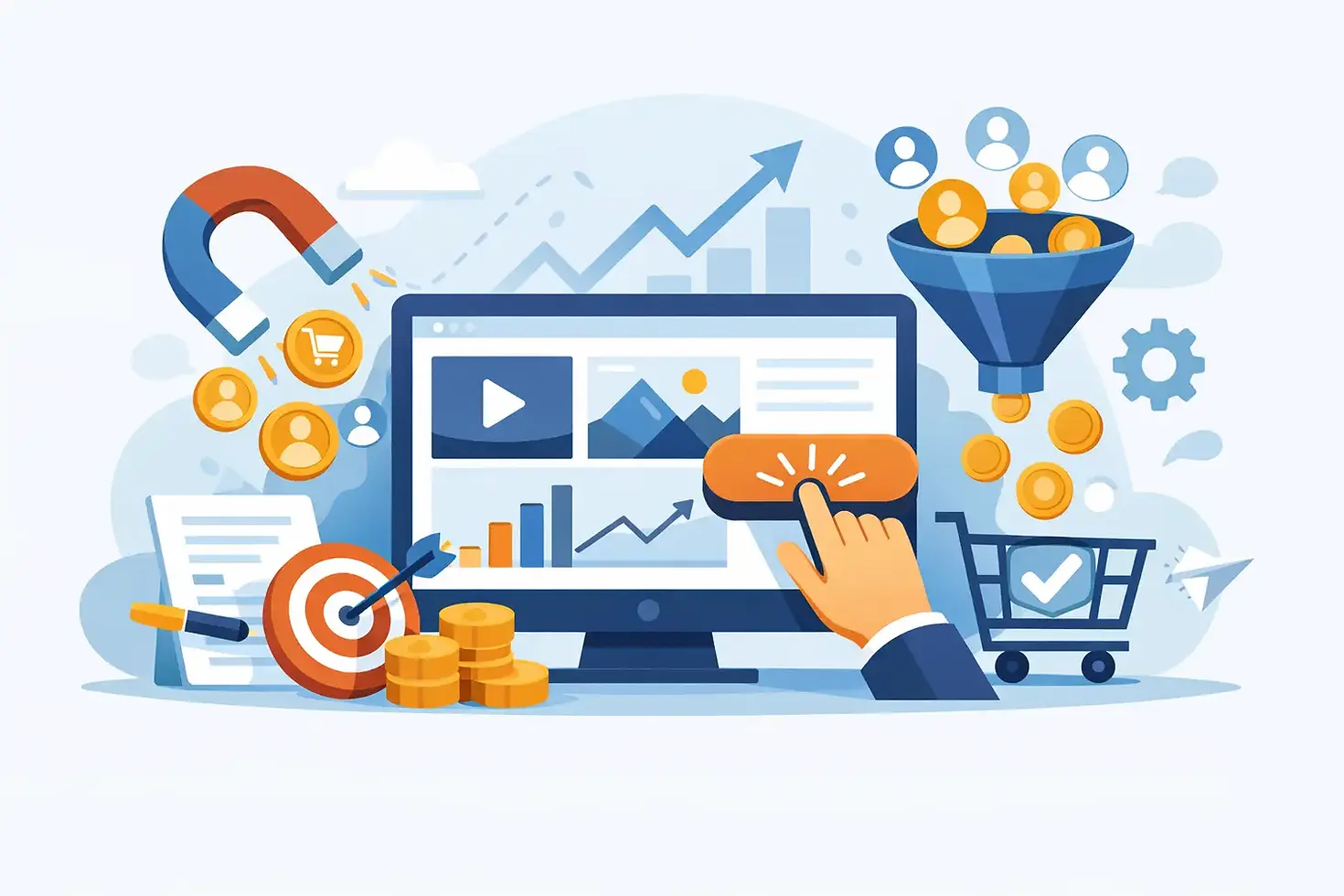
Conversion Focused Content Marketing That Sells

Most businesses do not have a content problem. They have a conversion problem.
They are posting consistently, running campaigns, and publishing videos, but the pipeline still feels unstable. Traffic comes in, engagement looks decent, and then the numbers that actually matter stall out. That is where conversion focused content marketing changes the game. It shifts content from being an activity your team maintains into a system that moves people toward inquiry, purchase, or booked calls.
For brands that are serious about growth, this matters because content is rarely failing on reach alone. More often, it is failing at alignment. The message is too broad, the call to action is weak, the landing experience is disconnected, or the follow-up is slow. Content gets blamed, but the real issue is usually the system around it.
What conversion focused content marketing actually means
Conversion focused content marketing is content built to generate a measurable business action, not just attention. That action could be a lead form submission, a direct message, a product sale, an appointment booking, or even a qualified inquiry from a specific audience segment.
This does not mean every post needs to sound like a hard sell. That is where many brands get it wrong. Conversion-driven content still educates, builds trust, and creates demand. The difference is that it does those things with clear intent. Every piece has a job in the funnel.
A top-of-funnel video might be designed to stop the scroll and frame a pain point. A mid-funnel carousel or short-form video might handle objections and build confidence. A bottom-funnel asset might push urgency, prove results, or direct the audience to a highly specific offer. Each stage supports the next.
The key idea is simple. Content should not live in isolation. It should connect to an offer, a path, and a next step.
Why most content underperforms
A lot of marketing teams still measure content success with surface metrics. Views, likes, shares, and follower growth all have value, but none of them mean much if the sales team is still chasing weak leads or if the website is not producing action.
The bigger issue is fragmentation. One team handles social content, another runs ads, someone else owns the landing page, and sales follows up with a completely different pitch. The brand looks active, but the buyer journey feels disjointed.
That disconnect shows up in a few common ways. The content attracts the wrong audience. The hook is strong, but the offer is vague. The creative looks polished, but the message does not answer buyer hesitation. Or the campaign generates demand that the business cannot capture properly because the form, page, or response process is too slow.
This is why conversion performance is never just about creative quality. Great content can still fail inside a weak funnel.
The core components of conversion focused content marketing
If content is expected to drive revenue, it needs more than good design and clever copy. It needs structure.
The first component is audience clarity. Not broad demographics, but real buyer intent. What problem are they trying to solve right now? What outcome do they want? What are they skeptical about? A founder in retail, a property marketer, and an education brand manager may all want more leads, but they do not respond to the same messaging.
The second is offer clarity. Even strong content struggles when the offer is fuzzy. If your audience cannot quickly understand what you do, who it is for, and why they should act now, attention leaks fast. Good conversion content makes the offer easier to buy, not just easier to notice.
The third is funnel fit. Different platforms and formats play different roles. Short-form video can generate interest quickly. Search content can capture existing intent. Retargeting content can close the gap for people who need more proof. Email and direct messaging can carry the conversation further. It depends on your sales cycle, price point, and buyer behavior.
The fourth is response design. Your landing page, lead form, direct message workflow, and follow-up sequence matter as much as the content itself. If content creates intent but the next step creates friction, conversion drops.
The fifth is measurement. Not generic reporting, but numbers tied to outcomes. That means tracking what content themes generate qualified leads, which formats influence assisted conversions, and where prospects drop out between click and close.
Content that converts looks different at each stage
Not all content should ask for the same action. When brands push bottom-funnel calls too early, they usually get ignored. When they stay too educational for too long, they build attention without momentum.
At the awareness stage, the goal is relevance. This is where strong hooks, category insights, pain-point framing, and platform-native creative do the work. You are not asking for a major commitment yet. You are earning attention from the right people.
At the consideration stage, the content needs to reduce uncertainty. This is where case angles, before-and-after thinking, FAQs, product demos, objection handling, and comparison content become useful. A buyer is asking whether your approach fits their situation.
At the decision stage, buyers need confidence and speed. Proof matters more here. Specific results, process transparency, testimonials, pricing logic, deadlines, and clear next steps all help. If your content still sounds vague at this stage, you are making the buyer work too hard.
One of the biggest gains businesses can make is to stop treating content as one layer and start mapping it against actual buying stages. That change alone improves conversion efficiency because the message meets the moment.
Platform reach is not enough without message discipline
A lot of businesses are now active across TikTok, Instagram, Facebook, YouTube, Xiao Hong Shu, and search. That can be powerful, but only if the message is coordinated.
Being on more platforms does not automatically create more sales. In some cases, it creates more noise. If each channel is saying something different, using a different offer, or targeting a different pain point, the market gets a fragmented impression of your brand.
Message discipline fixes that. It means keeping the core promise, offer logic, and conversion path consistent while adapting the creative to each platform. A short-form video should not look like a search page, and a lead form ad should not read like a brand film. But they should still feel connected.
For businesses in competitive markets like Singapore and Malaysia, this becomes even more important because buyers often compare fast. They may see your ad, check your profile, search your brand, and ask for proof within the same session. If the journey feels disconnected, trust drops quickly.
What to fix first if your content is not converting
Start with the gap between attention and action. If content gets reach but no inquiries, your call to action, offer, or landing flow may be weak. If clicks are strong but leads are poor quality, the message may be too broad or attracting low-intent users. If leads come in but sales stay flat, the issue may be qualification, sales handling, or follow-up speed.
This is where many teams waste time. They assume the answer is more content volume. Usually it is better conversion logic.
Refine the hook so it attracts the right buyer, not everyone. Tighten the offer so the next step feels obvious. Remove friction from forms and pages. Build retargeting content for people who showed intent but did not act. Make sure sales and marketing are working from the same positioning.
If your business sells higher-ticket services or products, expect a longer path. Buyers may need more proof, more reassurance, and more repeated exposure before converting. That does not mean content is failing. It means your funnel needs to support the buying cycle instead of forcing a one-step close.
The brands that win treat content as part of the revenue system
The strongest marketing teams are not chasing random virality. They are building a machine where strategy, creative, paid media, landing experience, analytics, and follow-up work together.
That is the real advantage of conversion focused content marketing. It creates accountability. Instead of asking whether content performed, you can ask what role it played in revenue generation, where it moved buyers forward, and where the process needs tightening.
At JDA Immersive Media, this is exactly how we look at content. Not as isolated posts, but as part of a structured digital system built to generate traffic, leads, and sales.
If your content is active but your pipeline still feels inconsistent, the answer is probably not more noise. It is sharper messaging, tighter funnel alignment, and content built to move buyers with intent.


Comments